ReactJS
Integrating WebRTC with React for Real-Time Video Calling Applications

Yash Samtariya•Aug 18, 2025
Understanding WebRTC and React
- WebRTC
- The open-source WebRTC project enables real-time communication functions for audio and video together with data transfer through web browsers and devices without depending on browser plugins.
- Many contemporary video conferencing software platforms use it as their fundamental connection method.
- React
- Facebook created React as a JavaScript library which enables developers to construct user interfaces.
- Web applications gain benefits from its component-based structure alongside productive state management protocols which perfect the development of dynamic and responsive interfaces.
- WebRTC Integration with React
- WebRTC integration with React developers build unbroken real-time communication functions inside web applications.
- This is achieved through the UI development strengths of React combined with WebRTC peer-to-peer communication capabilities.
Architectural Overview
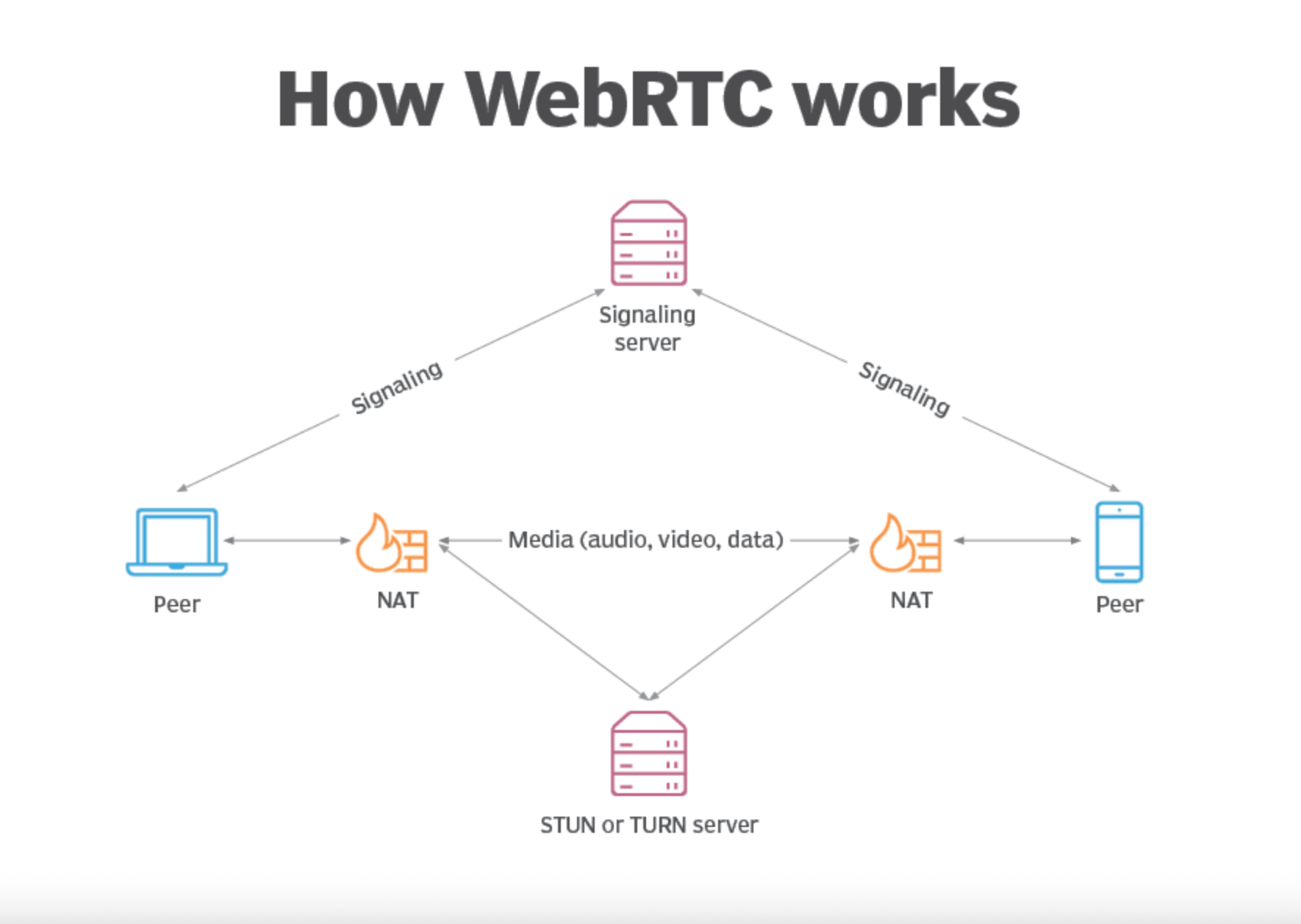
A conventional WebRTC video calling system built with React contains a series of essential parts which include:
- WebRTC APIs and React
- WebRTC APIs enable the Client Application to display data through the user interface.
- They handle media streams with peer connections through its React components.
- Signaling Server
- The signaling server serves as a medium for peers to exchange session control information.
- This includes offers, answers, and ICE candidates needed to establish a connection.
- STUN/TURN Servers
- Media transmission between clients becomes possible through STUN/TURN Servers.
- These servers help maintain communication across NAT (Network Address Translation) restrictions.
- Media Servers (Optional)
- Media Servers operate as an optional component.
- They are used for recording functions, multi-party calls, and broadcasting purposes.
Essential Packages and Libraries
- Core Tools Required
- Developing a WebRTC application with React requires three essential tools including the React framework as well as Socket.IO and Simple-peer libraries.
- React
- The User Interface development requires React as its building toolkit.
- Socket.IO
- The signaling tasks of Socket.IO enable client-server communication to happen instantaneously in both directions between client and server.
- Simple-peer
- The 'Simple-peer' package functions as a WebRTC management tool.
- It provides an easier method for peer-to-peer connection control.
- STUN/TURN Servers
- STUN/TURN Servers from Twilio and Google provide the necessary Network Traversal Services.
Setting Up the Development Environment
- Create React Application
- The first step creates a new React application by running:
- npx create-react-app webrtc-video-call
- The first step creates a new React application by running:
- Install Dependencies
- Users need to install the following dependencies through npm command:
- socket.io-client
- Simple-peer
- Users need to install the following dependencies through npm command:
- Setup Node.js Signaling Server
- The Node.js server with Socket.IO functions to send signaling data between two peers should be deployed.
- Through this server, all exchanges of offers and answers and ICE candidates occur, which enables peer connection establishment.
Core Concepts in WebRTC Integration
- Media Stream Acquisition
- The media stream acquisition process operates through the function called getUserMedia.
- This enables camera and microphone access.
- Peer Connection Setup
- The RTCPeerConnection API functions as a method for peer connection setup.
- Signaling and Session Exchange
- Users exchange session descriptions and ICE candidates through the signaling server.
- This is necessary to form the connection.
- Data Channels
- Through Data Channels, peers can send and receive non-media information to each other.
Best Practices
- Error Management
- A strong error management system needs implementation to handle media access failures together with connection problems
- Security Measures
- Your application must ensure security through HTTPS deployment.
- It should also include correct user permission management to establish safe communication.
- Scalability and Performance
- To handle applications with heavy traffic alongside multi-party calls, it is wise to include media servers or SFUs (Selective Forwarding Units) for managing network loads.
- Responsive UI and Feedback
- A user interface should respond to different screen sizes.
- It should also display clear feedback messages to users during connection states.
Conclusion
WebRTC integration with React development enables the creation of reliable applications which enable real-time video calling. Adept control over communication system design principles combined with correct tools leads developers to build resilient real-time communication platforms.


